

Last Updated: October 25, 2026
Quick Summary
A dust-free remodel is a renovation where containment, filtration, and cleanup are planned before demolition starts, not improvised after the first wall comes down. No remodel is literally dust-free, so a quality experience depends on how much dust escapes, where it lands, and who cleans it up.
- Dust containment works in three layers: stop dust leaving the work zone, filter escaping air, and capture dust at the tool.
- Negative air pressure keeps the work zone pressure lower than the rest of the house so air flows inward.
- A contractor dust-control plan should name the containment method, filtration equipment, daily cleanup routine, and verification.
- Daily cleanup includes a midday pass, an end-of-shift pass, and a weekly detail of adjacent rooms and barrier seals.
- The handoff should include a dust inspection checklist signed by both parties, covering adjacent rooms and HVAC filters.
Table of Contents
- What a Quality Dust-Free Remodel Actually Looks Like
- Dust Control During Remodeling: Why It Decides the Experience
- Remodeling Dust Containment: Barriers, Negative Air, and Source Capture
- Comparing Dust-Control Approaches Side by Side
- What a Contractor Dust-Control Plan Should Include
- Remodeling Site Cleanup and the Handoff After Construction
- How the Best Contractors Stack Up on Dust Control
- Book a Walkthrough and Get Your Dust-Control Plan
- Frequently Asked Questions
What a Quality Dust-Free Remodel Actually Looks Like
A dust-free remodel is a renovation where containment, filtration, and cleanup are planned before demolition starts, not improvised after the first wall comes down.
Here is the uncomfortable truth most guides skip: no remodel is literally dust-free.
Below, we break down what a real dust-control plan includes, how the main approaches compare, and what to ask a contractor before you sign.
Dust Control During Remodeling: Why It Decides the Experience
Remodeling dust is the single most common complaint homeowners raise during interior work, and it is the easiest problem to plan around.
The health angle matters too. The EPA’s guidance on indoor air quality during renovation notes that renovation activities can release particles and vapors into the home, which is why containment and ventilation belong in the plan rather than the cleanup list.
Dust control during remodeling affects three things homeowners actually feel:
- Livability. Whether you can stay in the house and use your kitchen or bathroom.
- Timeline. Dust migration forces extra cleaning days and rework.
- Trust. A crew that controls dust usually controls schedule and communication too.
Remodeling Dust Containment: Barriers, Negative Air, and Source Capture
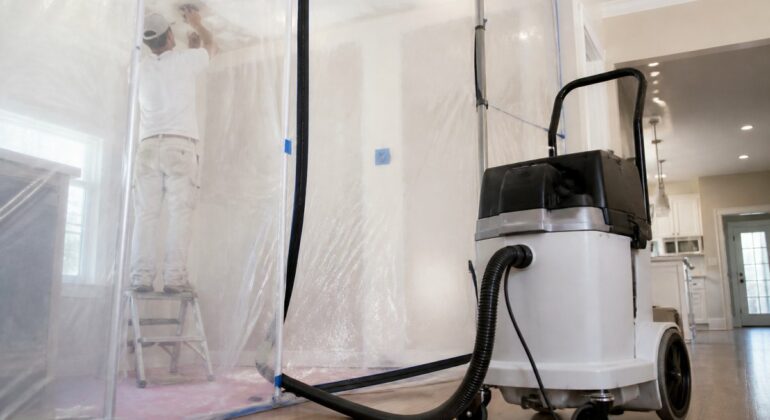
Remodeling dust containment works in three layers: stop dust from leaving the work zone, filter the air that does escape, and capture dust at the tool before it ever becomes airborne. Miss one layer and the other two carry a load they were not designed for.
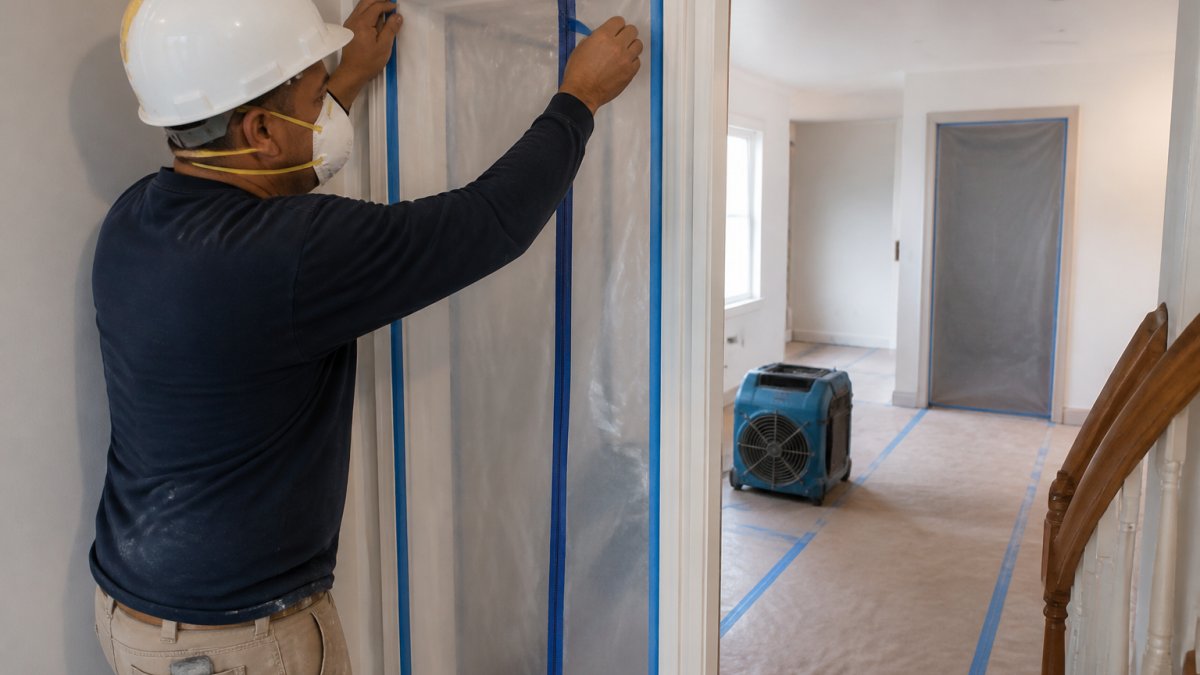
Plastic Barriers and Sealed Doorways
A dust barrier is only as good as its seals. Taped plastic sheeting across a doorway helps, but dust finds the gaps at the floor, the hinges, and the edges. Zippered doorway systems let crews pass through without breaking the seal, and taped floor protection stops tracked dust from spreading.
Work-zone isolation should also cover return-air vents near the work area. A temporary partition that ignores HVAC openings is decoration.
HEPA Air Scrubbers, Negative Air Pressure, and HVAC Protection
Negative air pressure is the mechanism that makes containment work. An exhaust fan or air scrubber pulls air out of the work zone so the pressure inside stays lower than the rest of the house.
HEPA filtration captures the fine particles that ordinary filters pass. For a deeper look at why ventilation matters during renovation, see our guide on why proper ventilation matters during home renovation projects.
Dust Extractors on Power Tools and HEPA Vacuum Cleanup
Source capture is the most underrated layer. A dust extractor connected to a sander, saw, or rotary tool catches dust at the point of generation.
Low-dust work practices support all of this. Scoring instead of cutting, misting surfaces before scraping, and sanding with extraction attached are habits, not equipment purchases. They separate crews that manage dust from crews that chase it.
Comparing Dust-Control Approaches Side by Side
Dust-control approaches differ in cost, effort, and how much dust actually stays out of your living space. Here is how the common options stack up.
| Approach | What It Involves | Effectiveness | Best For |
|---|---|---|---|
| Plastic sheeting and tape only | Basic barrier at doorways | Low to moderate | Short, light work |
| Zippered barriers and sealed doorways | Reusable doorway systems, floor protection | Moderate to high | Occupied homes, multi-week projects |
| Negative air pressure plus HEPA scrubber | Exhaust fan, sealed work zone, HEPA filtration | High | Sanding, demolition, drywall work |
| Source capture on tools | Dust extractor on saws and sanders | High at the source | Any cutting or sanding |
| Full layered plan | All of the above plus daily cleanup | Highest | Whole-home and occupied remodels |
One honest limitation: layered containment costs more upfront and adds setup time. For a one-day repair, a full negative-air setup is overkill. For a kitchen remodel in an occupied home, skipping it is the expensive mistake.
What a Contractor Dust-Control Plan Should Include
A contractor dust-control plan should name the containment method, the filtration equipment, the daily cleanup routine, and who verifies the work zone at the end of each day. If a proposal says “we keep things clean,” it is not a plan.
Ask for these specifics in writing:
- Barrier type and where it goes, including HVAC returns
- Whether negative air pressure is used, and with what equipment
- Which power tools run with dust extraction attached
Watch out: a plan that covers containment but omits cleanup leaves the fine dust layer for you to handle after the crew leaves.
Dust-Control Plans by Project Type and Home Occupancy
Occupancy changes the plan. An empty house tolerates more aggressive containment; a family living through a bathroom remodel does not.
- Occupied single-room work: zippered barrier, negative air, source capture, daily HEPA vacuuming.
- Occupied whole-floor remodel: full work-zone isolation, continuous scrubbing, sealed HVAC returns, scheduled dust-free access routes.
- Vacant property: containment still matters for HVAC protection and final cleaning quality.
For a closer look at how on-site coordination supports this kind of work, read about on-site coordination for dust-controlled restoration.
Remodeling Site Cleanup and the Handoff After Construction
Remodeling site cleanup is where dust control succeeds or fails in the homeowner’s memory. The final walkthrough should include a dust check, not just a punch list. A quality handoff is a sequence of verified steps, not a handshake and a promise that everything is clean.
The Daily Cleanup Routine
Daily cleanup is the difference between a contained project and a dust migration event. A workable routine looks like this:
- Midday pass: HEPA vacuum the work zone floor and wipe horizontal surfaces where dust settles.
- End-of-shift pass: vacuum the work zone and the transition zone, damp-wipe the barrier exterior, and empty or seal debris bags before leaving.
- Weekly detail: wipe down adjacent occupied rooms, check the HVAC filter, and inspect the barrier seals for gaps or tears.
When materials, tools, and waste have designated places, debris removal happens daily instead of piling up. Our article on why construction site organization matters during renovation projects explains how that discipline protects both schedule and air quality.
Pre-Handoff Verification Checklist
Before the final walkthrough, the contractor should verify the work zone and the occupied areas against a written checklist. A practical version includes:
- Visual inspection of the work zone and adjacent rooms under bright light, including corners, trim, and the tops of door frames.
- Wipe test of horizontal surfaces in the occupied rooms, a white cloth should come away clean.
- HEPA vacuuming of floors, vents, and the transition zone.
HVAC Checks and Filter Replacement
Dust that reaches the HVAC system can recirculate for weeks after the crew leaves. The handoff should include:
- Filter replacement: install a new filter before the system is returned to normal operation, and note the filter size and MERV rating for the homeowner.
- Return and supply inspection: check registers in and near the work zone for visible dust, and vacuum them with a HEPA vacuum if needed.
- System check: run the system briefly and confirm airflow at the registers, and note any unusual noise or odor for follow-up.
Post-Construction Cleaning Scope
Post-construction cleaning is not the same as daily cleanup. It should be scoped in writing and include:
- HEPA vacuuming of all floors in the work zone and adjacent rooms.
- Damp-wiping of walls, trim, and built-in surfaces in the work zone.
- Cleaning of light fixtures and ceiling fans in the work zone.
The Signed Handoff
A measurable definition helps here. A quality remodel experience means: the work zone stayed contained, the occupied rooms stayed usable, the schedule held, and the handoff passed a dust inspection both parties signed off on. Put the checklist in writing, walk it with the homeowner, and have both parties sign. That document is the difference between a claim of cleanliness and a verified result.
A handoff that covers only the work zone leaves the fine dust layer in the occupied rooms for the homeowner to handle. Insist on a checklist that includes adjacent rooms, HVAC filters, and the transition zone.
How the Best Contractors Stack Up on Dust Control
The best contractors on dust control share four traits: a written plan, the right equipment, daily execution, and verification at handoff.
When you compare contractors, score them on these criteria:
- Plan specificity. Named equipment and methods, not general assurances.
- Containment depth. Barriers, negative air, and source capture together.
- Cleanup routine. Daily, not just at the end.
Clear communication is not a soft skill in this context. For a closer look at how clear communication and accountability work with licensed renovation contractors, read Best Clear Communication with Licensed Renovation Contractors.
This is also where we hold ourselves to a standard.
Best for: homeowners staying in the house during a remodel, and commercial clients who need a clean handoff.
Skip if: you want the lowest bid with no containment scope.
Book a Walkthrough and Get Your Dust-Control Plan
The gap between a stressful remodel and a smooth one usually comes down to what was planned before demolition.
We bring 15+ years of experience, SBE and CBE certification, and a track record of 97% on-time delivery and 98% client retention.
Contact our team to schedule your walkthrough and get a dust-control plan in writing before work begins. Get started with IJS Limited Construction and keep your home livable through the entire remodel.
Frequently Asked Questions
What is the easiest and most effective way to control remodeling dust?
Source capture beats cleanup every time. Attaching a dust extractor or HEPA vacuum to saws, sanders, and routers stops most airborne particles before they spread. Pair that with a sealed plastic barrier at the work-zone doorway and a HEPA air scrubber running continuous filtration, and you cut dust migration dramatically. The cheapest single step is still sealing doorways and covering HVAC vents, but it only works when the tools themselves are also controlled at the source.
What should a contractor dust-control plan include?
A solid contractor dust-control plan names the work-zone isolation method, the type of dust barrier and sealed doorway, how HVAC vents get protected, whether negative air pressure and outdoor exhaust are used, which HEPA air scrubbers and dust extractors go on site, the daily cleanup schedule, and how the final post-construction cleaning is verified. Ask for it in writing before work starts. A plan that only says we clean up daily is not a plan, it is a promise.
Can remodeling dust affect indoor air quality in the rest of the house?
Yes. Construction dust from sanding, scraping, and demolition migrates through doorways, HVAC returns, and gaps in temporary partitions. Fine airborne particles can settle on surfaces far from the work area and get pulled back into air circulation. Negative air pressure with outdoor exhaust, HEPA filtration, and sealed doorways are the main defenses. Homes with occupants who have asthma or allergies should insist on all three, not just plastic sheeting.
How often should a remodeling site be cleaned during a project?
Daily cleanup is the baseline for an occupied home. That means sweeping or HEPA vacuuming the work zone at the end of each day, bagging debris removal, and wiping down surfaces outside the barrier where dust has escaped. Heavier dust-generating days, like sanding drywall or tearing out tile, warrant mid-day cleanup too. Ask your contractor to describe the daily cleanup routine and who is responsible for it, because site cleanup is where most dust-control plans quietly fall apart.
What should homeowners ask a contractor about dust containment before hiring?
Ask three things: what equipment will be on site (air scrubber, dust extractor, HEPA vacuum), how the work area will be isolated (barriers, sealed doorways, HVAC protection), and how cleanup and verification happen at the end. Then ask for it in writing as part of the scope. A contractor who cannot describe their dust containment in specifics before the contract is signed is unlikely to deliver a livable remodeling experience once the work begins.
Dust is the part of a remodel nobody photographs and everybody remembers. If you are planning interior work and want containment handled as a construction method rather than an apology, reach out. We will walk your space, explain exactly how we keep dust out of your living rooms, and put the plan in writing. Get started with IJS Limited Construction and a remodel you can actually live through.