
Water damage is one of the most common causes of interior deterioration in both residential and commercial properties. While visible stains and peeling paint may seem minor at first, moisture problems often extend deeper into drywall, framing, insulation, and other structural components. Left untreated, water intrusion can weaken building materials, increase repair costs, and create conditions that affect the long-term performance of the property.
Whether caused by plumbing leaks, roof failures, HVAC issues, flooding, or hidden moisture buildup, water damage should never be ignored. Understanding how moisture affects drywall and interior structures helps property owners make informed decisions and prevent larger renovation expenses later.
Why Drywall Is Especially Vulnerable to Water Damage
Drywall is widely used because it is cost-effective, efficient to install, and creates smooth interior surfaces. However, one of its biggest weaknesses is its ability to absorb water quickly.
Drywall panels typically contain:
- A gypsum core
- Paper facing
- Lightweight construction materials
When water reaches drywall, the material can absorb moisture and begin deteriorating faster than many people expect.
Common results include:
- Soft wall surfaces
- Swelling
- Bubbling
- Warping
- Surface staining
- Structural weakening
In severe cases, drywall may lose its shape entirely and require replacement instead of repair.
Properties undergoing restoration often combine drywall work with interior improvements such as painting, remodeling, and structural updates to restore both appearance and performance.
Hidden Water Damage Can Spread Beyond the Surface
One challenge with water damage is that visible signs do not always reflect the full extent of the problem.
Moisture often travels through:
- Wall cavities
- Ceiling spaces
- Flooring systems
- Insulation layers
- Structural framing
As water spreads, it may affect materials that remain hidden behind finished surfaces.
Interior structural components at risk include:
- Wood studs
- Ceiling supports
- Subfloors
- Interior framing
- Insulation
- Fasteners and connectors
When moisture remains trapped, structural materials may begin losing strength over time.
This is one reason property inspections are important before starting major renovation projects.
Common Causes of Water Damage Inside Buildings
Water intrusion can happen in many ways and is not always caused by major flooding events.
Some of the most common causes include:
Plumbing Leaks
Small leaks inside walls often remain unnoticed for long periods and gradually damage surrounding materials.
Roof Leaks
Damaged roofing systems allow water to move downward into ceilings and wall assemblies.
HVAC Condensation
Poor drainage or excessive condensation can introduce moisture into interior spaces.
Window and Door Failures
Worn seals allow rainwater to penetrate wall systems.
Foundation Moisture
Water entering through foundations can affect lower-level drywall and interior finishes.
Appliance Failures
Dishwashers, water heaters, and refrigeration systems may release water unexpectedly.
Identifying the source is essential before beginning repair work.
How Water Damage Changes Drywall Performance
Water affects more than appearance—it changes how drywall functions.
Moisture exposure can reduce:
- Surface durability
- Fire resistance
- Insulation performance
- Structural stability
- Finish quality
Once drywall absorbs enough moisture, fasteners may loosen and joints may separate.
Property owners may notice:
- Cracked seams
- Bulging sections
- Uneven wall surfaces
- Ceiling sagging
- Paint failure
When these symptoms appear repeatedly, hidden moisture may still be present.
Mold Growth and Indoor Environment Concerns
Moisture combined with enclosed interior spaces creates conditions that may support mold growth.
Water-damaged drywall can retain moisture inside paper layers and wall cavities, allowing microbial activity to develop.
Possible warning signs include:
- Persistent musty smells
- Dark surface spots
- Increased indoor humidity
- Recurring discoloration
- Surface deterioration
Because moisture can remain hidden behind finished walls, professional assessment is often necessary after significant water events.
During restoration projects, moisture control and drying procedures are typically completed before installing new drywall or finishes.
Ceiling Damage Often Signals Larger Interior Problems
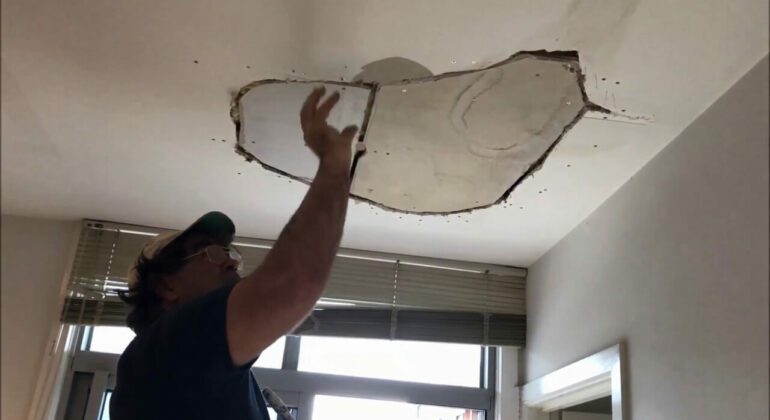
Ceiling damage is frequently one of the first visible signs of hidden water intrusion.
Water entering from above may create:
- Circular stains
- Sagging sections
- Cracks
- Joint separation
- Surface bubbling
However, ceiling damage may indicate broader concerns involving:
- Roofing systems
- Plumbing lines
- HVAC infrastructure
- Structural supports
Repairing only the visible ceiling without correcting the source may result in recurring problems.
Many renovation projects combine ceiling restoration with lighting upgrades and interior remodeling to modernize affected areas.
Water Damage Can Increase Renovation Costs
Delaying water damage repairs often increases the overall scope of construction work.
What begins as localized drywall replacement may eventually require:
- Full wall reconstruction
- Flooring replacement
- Structural repairs
- Electrical updates
- Insulation replacement
- Interior repainting
Commercial properties may also experience:
- Operational interruptions
- Tenant complaints
- Extended project timelines
Early intervention typically reduces restoration complexity and limits disruption.
Businesses preparing renovation plans often include moisture inspections before beginning remodeling work.
Energy Efficiency Can Be Reduced by Moisture Damage
Interior structures work together to support energy performance.
When insulation and wall assemblies become wet, buildings may experience:
- Higher heating and cooling demands
- Uneven temperatures
- Increased humidity
- Reduced indoor comfort
Water-damaged insulation often performs below expected levels.
Modern renovation strategies frequently combine restoration with:
- Improved insulation
- Energy-efficient upgrades
- Ventilation improvements
- Interior reconstruction
These upgrades help improve long-term building performance.
Preventing Future Drywall and Structural Damage
Preventative maintenance remains one of the most effective ways to reduce future water-related repairs.
Helpful practices include:
- Inspect roofs regularly
- Monitor plumbing systems
- Repair leaks promptly
- Maintain gutters and drainage
- Check HVAC condensate systems
- Inspect basements and crawlspaces
- Watch for discoloration or soft surfaces
Property managers and owners who schedule regular inspections often identify issues before major interior damage develops.
Preventative maintenance also supports long-term property value.
Why Professional Assessment Matters
Water damage can appear smaller than it actually is.
Professional inspections may help identify:
- Hidden moisture
- Structural concerns
- Material deterioration
- Drywall replacement needs
- Interior restoration priorities
Repair plans often involve multiple services working together, including:
- Drywall installation
- Interior painting
- Remodeling
- Flooring replacement
- Structural restoration
Addressing both visible and hidden damage creates more durable renovation outcomes.
Conclusion
Water damage can significantly affect drywall and interior structures even when the initial signs appear minor. Moisture spreads quickly through wall systems and may weaken structural materials, reduce energy efficiency, damage finishes, and increase future repair costs.
Drywall is especially vulnerable because of its absorbent composition, making early detection and timely repairs essential.
By addressing leaks quickly, maintaining building systems, and completing proper restoration work, property owners can protect interior spaces and reduce the likelihood of larger renovation projects in the future.